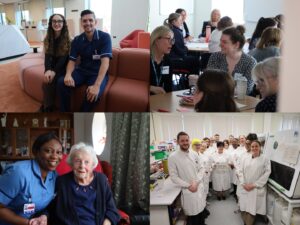

- More than 300 babies in Bolton take part in study aiming to speed up diagnosis of rare conditions
- The Generation Study aiming to provide earlier access to treatment
- Bolton midwives share what it means to work on trial and support advancement of healthcare
More than 300 newborn babies in Bolton have taken part in a study aiming to speed up the diagnosis of more than 200 rare genetic conditions.
The Generation Study analyses the DNA of newborn babies to identify conditions, such as Spinal Muscular Atrophy (SMA), with the aim of providing earlier access to treatment and transforming neonatal care both and now in the future.
Bolton NHS Foundation Trust joined the world-leading study in February 2026, which is being led by Genomics England in partnership with NHS England.
To mark the six-month milestone, two of the Trust’s midwives have shared what it means to work on the trial and support the advancement of future healthcare.
Humairaa Patel, Research Midwife at Bolton NHS Foundation Trust, said:
“Midwives play a vital role in advocating for families, enabling them to feel empowered to access personalised and safer care.
“Our aim in research is to provide all families with the opportunity to participate in research like The Generation Study for improved outcomes through early genetic testing.”
Early effective intervention can help to prevent longer term health problems associated with certain conditions, keeping children out of hospital, and helping them live healthier lives.
Stacey Davis, Research Midwife at Bolton NHS Foundation Trust, said:
“Midwives become involved in research to help improve care for women, babies and families, ensuring practice is guided by evidence and innovation.
“Research in healthcare helps shape safer and more effective future care, while studies such as The Generation Study have the potential to identify genetic conditions earlier, enabling quicker treatment and better long-term outcomes for children and families.”
Participation in the study is voluntary, and families can withdraw at any time. Babies will be re-consented around the age of 16, reflecting Genomics England’s commitment to ongoing, informed consent.
To find out more about the study, visit www.generationstudy.co.uk.