- Royal Bolton Hospital halves number of premature babies requiring breathing tubes at birth
- Use of non-invasive breathing methods have significantly improved outcomes for preterm babies
- Full findings from quality improvement project published in BMJ Journal
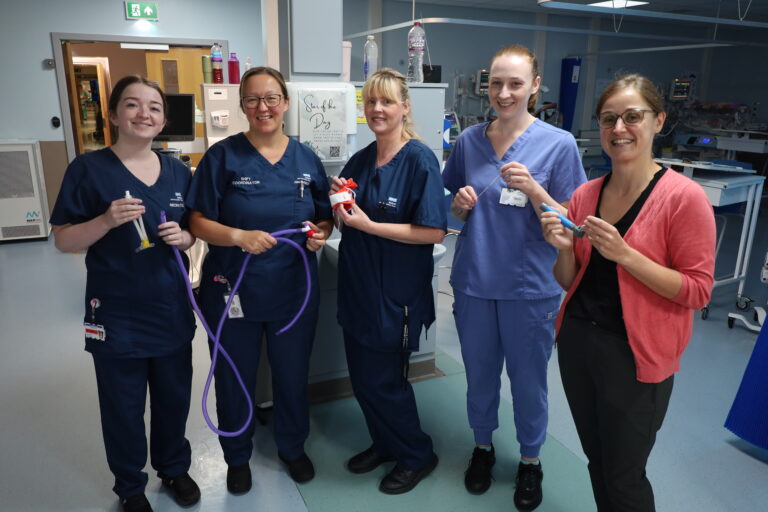
Royal Bolton Hospital has significantly reduced the number of premature babies requiring breathing tubes at birth, after introducing a new approach to delivery room respiratory care.
The hospital’s neonatal team launched a quality improvement project as figures from Bolton NHS Foundation Trust found its rates of bronchopulmonary dysplasia (BPD), a serious lung condition affecting premature babies, were higher than the national average.
Before the project began, 68% of babies born before 32 weeks were being given breathing tubes in the delivery room. Following implementation of new practices, this fell to 35%.
For babies eligible for delivery room CPAP (Continuous Positive Airway Pressure), a non-invasive method which helps babies breathe without inserting a breathing tube, intubation rates dropped from 70% to just 12%.
The project also increased the use of LISA (Less Invasive Surfactant Administration), a technique that delivers surfactant to the lungs while avoiding full intubation. Use of LISA rose from 9% to 35%, and 85% of babies who received LISA avoided needing breathing tubes later.
Hannah Spierson, Consultant in the Neonatal Unit at Bolton NHS Foundation Trust, said:
“While intubation can be lifesaving for premature babies who cannot breathe effectively on their own, when it can be safely avoided, intubation and mechanical ventilation can carry risks, including lung damage, long-term breathing problems and interference with early bonding.
“To support these improvements, we developed new clinical guidelines, introduced specialist equipment and delivered extensive training for our medical and nursing staff.
“We’re really proud that since we made these changes, nearly two thirds of babies didn’t receive intubation for breathing support during their first week of life, placing our unit above the national average.
“Families have also shared positive feedback as there is now more opportunity for parent-baby bonding at the earliest opportunity.”
The team continues to monitor outcomes and build on the improvements achieved through the initiative.
The full findings and review from the quality improvement project have been published in the BMJ Journal, which is available to read online.